Categories
- Ancestral Healing (6)
- Awareness (14)
- Belief and Mindset (14)
- Chakra Balance (2)
- Dream Interpretation (3)
- General Wisdom (3)
- Healing (8)
- Holistic Wellbeing (5)
- Hypnotherapy (5)
- Inner Child Healing (9)
- Life Coach (5)
- Mind and Body (5)
- Past Life Regression Therapy (15)
- Reiki Healing (7)
- Relationships (2)
- Spirituality (3)
- Stress Relief (2)
- Trauma (2)
- Uncategorized (1)
Recent Posts
- Can Past Life Regression Help You Understand Strong Feelings Toward Certain People?
- Ancestral Healing and Family Stories: Understanding the Patterns We Inherit
- How Expectations Can Create Emotional Attachments in Life
- Past Life Regression and Personal Beliefs: How Should We Understand These Experiences?
- How Attachment and Expectations Can Influence Our Karma
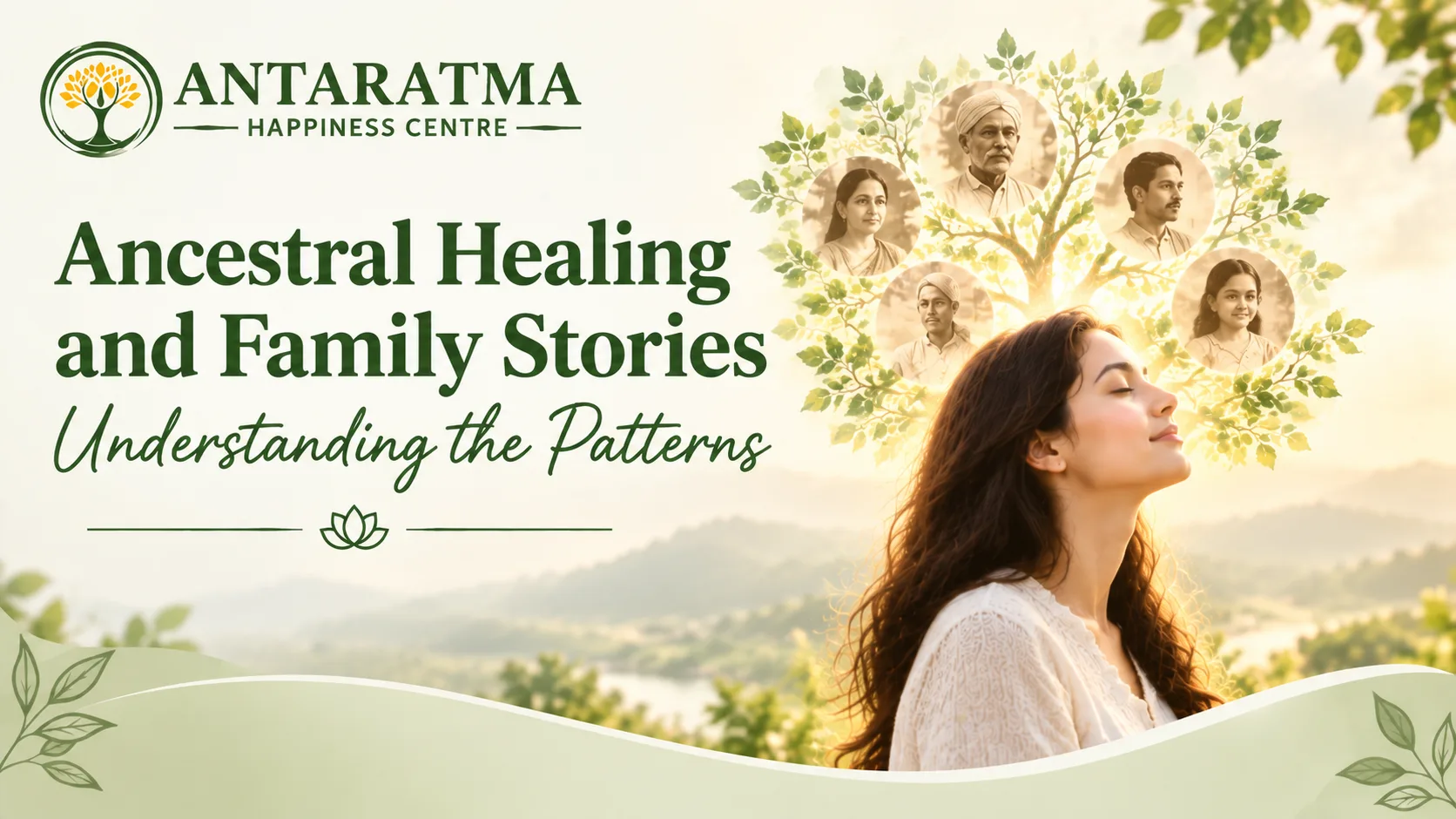
Ancestral Healing and Family Stories: Understanding the Patterns We Inherit
Introduction: Are You Living Your Own Story or Repeating Someone Else’s?
Have you ever wondered why certain patterns keep repeating in your life, even when you genuinely try to change them?
Perhaps you find yourself choosing emotionally unavailable partners, struggling to trust others, or feeling guilty whenever you put your own needs first. Maybe you worry about money even when your financial situation is stable, or you notice similar conflicts and relationship challenges appearing across different generations of your family.
Sometimes, these experiences make us question why certain situations feel so familiar. We may find ourselves reacting in ways we do not fully understand or following beliefs we never consciously chose.
Could some of these patterns be connected to the experiences, values, and emotional habits we learned within our families?
Our family history can influence how we understand relationships, express emotions, handle responsibilities, and make decisions. While not every personal challenge has an ancestral connection, exploring our family experiences can help us recognise behaviours and beliefs that we may have carried forward without realising it.
Ancestral Healing offers a way to explore these family patterns with greater awareness, compassion, and openness to change. Rather than blaming previous generations, it encourages us to understand our roots and make conscious choices about the future we want to create.
At Antaratma Happiness Centre, this exploration is approached as an opportunity for self-awareness, emotional healing, and personal growth.
Let us understand how family stories may influence our lives, why certain patterns can continue across generations, and how we can begin creating a healthier story for ourselves.
1. What Is Ancestral Healing?
Ancestral Healing is an approach to self-exploration that focuses on understanding how family experiences, learned behaviours, cultural beliefs, unresolved grief, and relationship dynamics may influence our present lives.
Every family carries a story.
Some parts of that story are openly discussed, while others remain hidden behind silence, shame, secrets, or unspoken expectations. Over time, these experiences can influence how family members understand love, success, money, responsibility, and emotional expression.
Consider a family in which several generations experienced financial hardship.
The grandparents may have struggled to meet basic needs. The parents may have worked tirelessly to avoid experiencing the same difficulties. Their children, in turn, may have grown up hearing statements such as:
- “Money never comes easily.”
- “You must save everything because tomorrow is uncertain.”
- “Money does not grow on trees.”
- “Enjoyment can wait until all your responsibilities are fulfilled.”
These statements may have developed from genuine experiences of insecurity. For the people who first expressed them, they may have been practical ways of coping with difficult circumstances.
However, children who repeatedly hear these messages may continue following them even when their own circumstances change.
An adult who is financially secure, for example, might still feel anxious about spending money, struggle to enjoy personal achievements, or feel guilty about purchasing something for themselves.
The original hardship may no longer exist, but the beliefs learned during that period can remain.
Ancestral Healing encourages us to examine these beliefs with curiosity rather than blame. It allows us to acknowledge the difficulties previous generations experienced while considering whether their coping strategies still serve us today.
The goal is not to reject our family history. It is to understand it, learn from it, and decide which parts we want to carry forward.
2. How Do Family Stories Become Patterns We Repeat?
Children learn about the world not only through what adults tell them but also through what they observe every day.
They notice how their parents respond to disappointment, whether affection is expressed openly, how disagreements are handled, and whether personal needs are welcomed or criticised.
Gradually, these observations can shape their understanding of what feels normal, acceptable, or safe.
As adults, we may continue following these patterns without consciously recognising where they began.
Pattern 1: Repeating Unhealthy Relationship Dynamics
Imagine a woman who notices that several women in her family have remained in relationships where their emotional needs were often ignored.
Her grandmother believed that a good wife should sacrifice everything for her family. Her mother rarely expressed disagreement because she feared conflict. Growing up in this environment, the woman gradually learned that love meant adjusting, tolerating discomfort, and putting everyone else first.
Years later, she finds herself repeating similar behaviours in her own relationships.
She avoids difficult conversations, takes responsibility for other people’s happiness, and feels guilty whenever she sets boundaries. Even when she recognises that a relationship is emotionally exhausting, walking away or asking for change feels uncomfortable.
This does not mean that her family has determined her future. Rather, familiar relationship dynamics may have influenced what she learned to accept as love.
The family message: “A good person always sacrifices.”
The possible pattern: People-pleasing, fear of rejection, and difficulty setting boundaries.
The opportunity for change: Learning that love can include care, respect, shared responsibility, honest communication, and mutual understanding.
A useful question to reflect on is:
Am I choosing this relationship because it is healthy for me, or because it feels familiar?
Recognising a familiar pattern can help us pause before repeating it. With awareness and support, we can begin making choices that better reflect our present needs and values.
Pattern 2: The Fear of Success and Being Seen
Family experiences can also influence how comfortably we accept success, recognition, and new opportunities.
Imagine a family whose earlier generations experienced jealousy, criticism, or conflict after becoming financially successful. Over time, family members may have developed the belief that standing out attracts unwanted attention.
Years later, a younger family member receives an opportunity for promotion, leadership, or entrepreneurship.
Although capable and interested, the person hesitates. They worry about being judged, upsetting relatives, or damaging existing relationships by becoming more successful.
They may tell themselves that remaining unnoticed is safer than taking a risk.
The family message: “It is safer not to stand out.”
The possible pattern: Self-doubt, hesitation, and discomfort with recognition.
The opportunity for change: Recognising that the circumstances faced by earlier generations may differ from those we face today.
We can respect our family’s experiences without assuming that the same fears must guide every decision we make.
Success does not have to mean rejecting our roots. It can also mean using the opportunities available to us while remaining connected to the values we cherish.
3. The Psychology Behind Intergenerational Patterns
Can experiences within one generation influence the next?
Family patterns can continue through several understandable psychological and social processes. Exploring these processes helps us recognise that some behaviours are learned and can therefore be reconsidered.
A. Social Learning: We Learn by Observing Others
Children often learn how to behave by watching the people around them.
If they regularly observe family members responding to conflict with anger, they may come to see anger as a normal way of expressing frustration.
If they grow up in a household where emotions are rarely discussed, they may find it difficult to communicate their feelings as adults.
Similarly, repeated messages about money, marriage, career choices, and personal responsibility can influence how children approach these areas later in life.
For example, someone raised in a family where mistakes were strongly criticised may become a perfectionist. Even after becoming independent, they might fear making decisions unless they are certain of the outcome.
Recognising social learning helps us understand that a behaviour can feel natural simply because we have practised it for many years.
It does not mean the behaviour is permanent.
With reflection, new experiences, and consistent effort, we can learn different ways of responding.
B. Attachment and Early Relationships
Our early relationships can influence how we understand closeness, trust, affection, and emotional security.
When caregivers respond consistently and sensitively to a child’s needs, the child may develop greater confidence in seeking support and expressing emotions.
When care is unpredictable or emotional needs are frequently dismissed, a child may become more sensitive to rejection or find it difficult to trust others.
These early experiences can influence adult relationships, although they do not determine how every person will behave.
For example, an adult who fears abandonment may repeatedly seek reassurance from a partner. Another person may avoid emotional closeness because depending on someone feels uncomfortable.
Understanding these responses can help individuals recognise their emotional needs and develop healthier ways of relating.
Supportive relationships, self-awareness, and appropriate therapeutic guidance can all contribute to personal growth.
C. Family Systems and Unspoken Rules
Every family develops certain expectations about how its members should behave.
Some expectations are helpful. Others may become restrictive when they are followed without question.
Examples of unspoken family rules include:
- “Never disagree with elders.”
- “Family problems must never be discussed outside the home.”
- “Your needs should always come after everyone else’s.”
- “You must choose a secure career, even if it makes you unhappy.”
- “Showing sadness is a sign of weakness.”
These rules may have developed in response to cultural expectations, financial pressures, social circumstances, or difficult family experiences.
However, what once helped a family cope may not always support the emotional well-being of every member today.
For instance, respecting elders does not require accepting every decision without discussion. Maintaining family privacy does not mean remaining silent about harmful behaviour. Choosing a stable career does not mean ignoring every personal interest.
The important step is learning to distinguish between values that support us and expectations that limit our choices.
We can explore family history as one possible influence on our lives without assuming that every difficulty has an ancestral cause.
4. The Influence of Unspoken Family Stories
Sometimes, the experiences a family avoids discussing can affect its relationships as much as the lessons it openly teaches.
Consider a family that experienced the early death of a loved one. The loss was deeply painful, so family members stopped talking about the person. Children grew up sensing sadness but were never given the opportunity to ask questions or understand what had happened.
Different family members may respond to this silence in different ways.
One person may become anxious about losing loved ones. Another may struggle to become emotionally close to people because attachment feels connected to pain. Someone else may feel responsible for keeping everyone happy to prevent further sadness.
These responses are not inevitable consequences of family grief. However, they illustrate how the emotional atmosphere within a family can influence the way individuals understand and respond to difficult experiences.
Other family stories may involve migration, discrimination, financial hardship, addiction, broken relationships, or the loss of a family business.
When such experiences remain unspoken, family members may develop their own explanations for the emotions and behaviours they observe.
Creating a safe space to acknowledge these experiences can help people understand their family history with greater clarity.
Sometimes, a meaningful starting point is simply recognising:
“Something painful happened in our family. We can acknowledge it without allowing it to define every part of our future.”
Understanding a difficult family experience does not erase the pain it caused. It can, however, create room for more honest conversations, healthier boundaries, and a different approach to the future.
5. Does Ancestral Healing Mean Forgiving Our Ancestors?
One common misconception about healing is that we must forgive everyone before we can move forward.
In reality, forgiveness is a personal process, and it may not be appropriate or possible for everyone at every stage of their journey.
Some people feel gratitude towards their ancestors and appreciate the sacrifices they made. Others experience grief, anger, disappointment, or complicated emotions about their upbringing.
Some may have experienced serious harm within their families.
You can recognise that a parent or grandparent faced difficulties while also acknowledging that their actions affected you.
You can understand how a harmful pattern developed without continuing it.
You can appreciate certain aspects of your family history while choosing a different future.
For example, you may understand that a parent became overly controlling because they feared financial insecurity. This understanding might help explain their behaviour, but it does not mean you must accept the same control in your own life.
Similarly, you can value the sacrifices made by previous generations without believing that you must sacrifice your happiness to prove your gratitude.
When family experiences feel overwhelming or involve trauma, working with a qualified mental health professional or appropriately trained therapist may provide valuable support.
6. How Can You Begin Recognising and Changing Family Patterns?
Understanding family history is only one part of the process. The next step is recognising how these experiences may influence your present behaviour and deciding what you want to change.
The following practices can help you begin.
Step 1: Notice What Repeats in Your Life
Step 2: Explore the Messages You Learned Growing Up
For example:
Learned belief: “If I disappoint someone, it means I am a bad person.”
Possible impact: Difficulty setting boundaries and saying no.
Step 3: Separate Your Needs From Family Expectations
Step 4: Practise Communicating Your Needs
Step 5: Learn to Set Healthy Boundaries
Step 6: Seek Support When You Need It
7. The Stories We Inherit Do Not Have to Become the Stories We Pass On
Every family carries a combination of strengths, wisdom, challenges, and learned behaviours.
We may inherit stories of courage, perseverance, kindness, creativity, and generosity. We may also learn fear, silence, shame, rigid expectations, or unhealthy ways of managing conflict.
Consider a few examples.
Perhaps your grandmother taught you the importance of commitment but also the belief that a woman’s needs must always come last.
Perhaps your father taught you discipline but also the idea that making mistakes is unacceptable.
Perhaps your family taught you to be generous but never taught you how to establish boundaries.
You do not have to reject the valuable parts of these lessons to change the parts that cause harm.
You can preserve commitment while allowing yourself to have needs.
You can practise discipline without demanding perfection.
You can remain generous without becoming emotionally exhausted.
You can value family relationships without believing that disagreement must lead to rejection.
These changes may appear small, but they can influence how you respond to everyday situations and how you relate to the people around you.
When you establish a healthy boundary instead of acting only from guilt, you demonstrate that love and self-respect can coexist.
When you communicate openly instead of remaining silent, you create an opportunity for more honest relationships.
When you allow yourself to make mistakes without treating them as personal failures, you begin developing a different relationship with yourself.
Over time, these choices may also influence the environment in which your children and loved ones grow.
Changing a family pattern does not mean changing the past. It means changing how you respond to it in the present.
Conclusion: Honour Your Roots, Transform Your Future
Ancestral Healing invites us to look at our lives through a wider lens.
Some of our struggles may be connected to behaviours we observed, beliefs we absorbed, or family roles we learned long before we understood their influence. Other challenges may arise from our individual experiences, current circumstances, or factors unrelated to our ancestry.
Understanding this distinction matters because it allows us to explore our family history without assuming that it explains everything about who we are.
You can begin by noticing what repeats, exploring where your beliefs may have originated, and deciding which patterns you want to change.
You do not need to blame your family to acknowledge the ways your upbringing has affected you. Nor do you need to repeat every family tradition simply because it has existed for generations.
As a healer and therapist, I see the exploration of family patterns as an invitation to greater awareness, compassion, and personal responsibility.
At Antaratma Happiness Centre, Manjari Madhura Agrawaal encourages individuals to explore their emotional patterns, understand their personal stories, and work towards greater self-awareness and healthier relationships.
The journey is not about finding fault with previous generations. It is about understanding the experiences that shaped us and making thoughtful choices about the person we wish to become.
Your family’s past may help explain some of the beliefs you carry, but it does not have to dictate every choice you make.
You can honour the people who came before you without carrying every burden they carried. You can appreciate your roots while allowing yourself to grow in a new direction.
The next chapter of your family story can begin with the choices you make today.
Leave a comment